
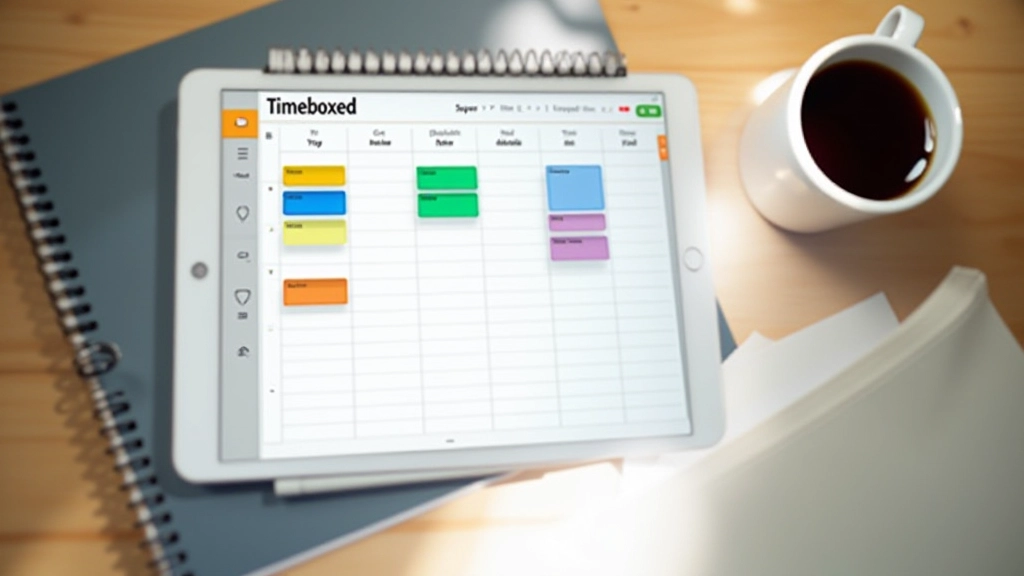
Timeboxing for Multiple Client Projects
How to allocate specific time blocks to different clients without losing track.
Master 25-minute work blocks to transform your daily output. No special apps required — just a timer and focus.


The Pomodoro Technique isn’t complicated. It’s a dead-simple time management method that breaks your work into focused 25-minute intervals called “pomodoros,” with short breaks in between. You’ll work intensely for 25 minutes, then step away for 5 minutes. After completing four pomodoros, you take a longer 15-30 minute break.
Created by Francesco Cirillo in the late 1980s, the method uses a timer — he actually used a tomato-shaped kitchen timer, which is where “pomodoro” (Italian for tomato) comes from. Here’s the thing: it works. Not because there’s anything magical about 25 minutes, but because it creates structure, reduces decision fatigue, and trains your brain to focus without distractions.

You’re probably wondering: why 25 minutes specifically? The answer isn’t arbitrary. Research on attention spans shows that most people can maintain deep focus for about 20-30 minutes before mental fatigue kicks in. Twenty-five sits right in that sweet spot.
When you know you only need to focus for 25 minutes, your brain doesn’t rebel. It’s not “work all day” — it’s “work until the timer goes off.” That makes a huge difference psychologically. Plus, the forced break gives your mind a genuine rest. You’re not just switching tasks; you’re genuinely stepping away.


Pick ONE specific task. Not “emails” — that’s too vague. Try “respond to client emails” or “draft project proposal.” Specificity matters because it prevents you from switching tasks mid-pomodoro.
Use your phone, a kitchen timer, or a web-based timer. Doesn’t matter. What matters is that you CAN’T adjust it once it’s running. No “just 5 more minutes” — that defeats the purpose.
No distractions. Phone away. Silence notifications. Your job is to focus completely on that one task. If something comes to mind, jot it down and handle it later. The timer creates accountability.
Actually step away. Get water. Stretch. Don’t just switch to a different task. A real break resets your brain. After four pomodoros, take a longer 15-30 minute break instead.
The technique is flexible. You’re not locked into 25 minutes forever. Here’s what actually works for different situations:
If you’re designing or writing, 25 minutes feels too short. Try 45-50 minutes instead. You’ll need more time to get into flow state. The principle remains: set a time, commit to it, take breaks.
Don’t force meetings into pomodoros. Use the technique for focused work between calls. Before a call, do one focused pomodoro. After, do another. This keeps your momentum without stress.
If you get interrupted or can’t finish, don’t count it as complete. This teaches you what’s realistic in your schedule. After 2-3 weeks, you’ll see patterns in how many pomodoros different tasks actually require.
Don’t jump between client work, admin, and projects every pomodoro. Do 2-3 pomodoros of the same task type. Your brain needs less context-switching. You’ll get faster and more focused.
Starting is the hard part. Here’s what works: commit to just ONE pomodoro today. Just one. Not eight, not five. One. Tomorrow, try two. By day three, you’re doing three pomodoros before lunch. That’s 75 minutes of genuinely focused work.
After one week of consistent use, your brain adapts. You’ll start feeling restless when a pomodoro ends. That’s the technique working — it’s training your focus muscle. By week two, you won’t want to skip the breaks because you’ll actually feel tired after 25 minutes of real work.
Track your pomodoros in a simple notebook. Just tally marks. “||||| |||” for eight pomodoros. You’ll be surprised how satisfying it is to see the count grow. Plus, after two weeks, you’ll have data: “I complete 12 pomodoros on Mondays, only 8 on Fridays.” That’s valuable information about your own rhythm.

“The technique isn’t about working harder. It’s about working with intention. You show up for 25 minutes, fully present. That’s the real skill.”
— Marcus Lim, Senior Productivity Strategist
You don’t need an app. You don’t need to buy anything. You need a timer and one commitment: try it tomorrow for just 25 minutes. Pick your task tonight. Set your timer when you start. See what happens.
Most freelancers who stick with this for two weeks don’t go back. Not because it’s perfect, but because it’s simple and it works. Your output increases. Your stress decreases. Your day feels more structured without feeling rigid.
That’s all the Pomodoro Technique is: permission to focus completely for 25 minutes, then genuinely rest. Simple. Powerful. Ready to start?
This article provides educational information about the Pomodoro Technique and time management principles. The techniques described are informational in nature and may not be suitable for all individuals or circumstances. Results vary based on personal working style, job requirements, and individual preferences. This guide is not professional productivity consulting. We recommend adapting any technique to your specific needs and consulting with productivity professionals if you have specialized requirements.